Skip to content
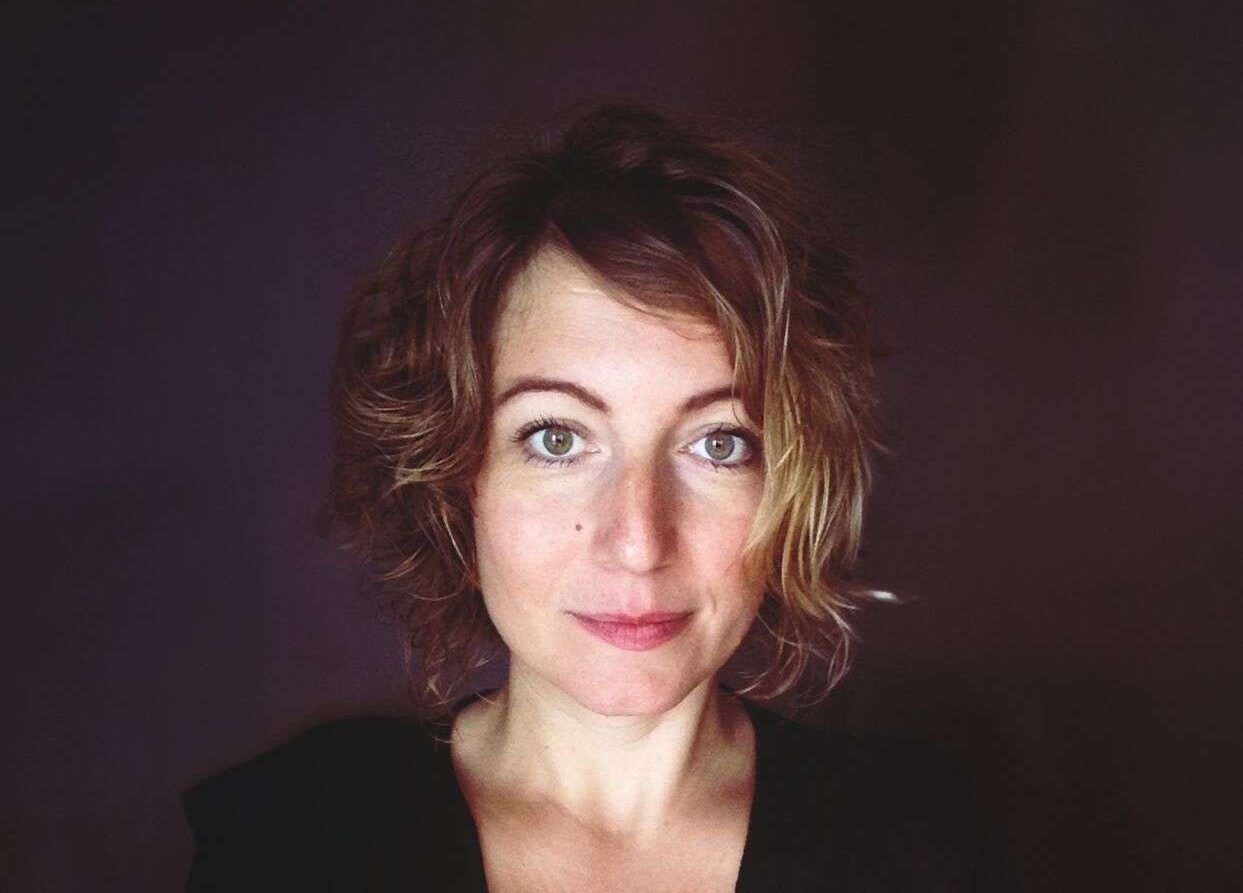
In our first interview for this year’s Hay Festival Writers at Work series, Carys Shannon reflects on her debut novel Truth Like Water, her writing life, inspirations, and the best creative advice she has ever been given.
Tell us about your writing life. When did it start? What does it look like now?
It was as a reader that the love for stories, as well as words themselves, became firmly planted in my mind. I was a shy child and travelled a lot with my parents’ work, so books were an escape, a comfort and a constancy for me as a child facing a lot of instability. From reading the writing came naturally, and I was always scribbling poems and writing stories, often with illustrations of talking animals going on incredible adventures. I don’t think I had a sense then that “being a writer” was something that was open to me – that seemed to be something that other people did “over there.” But I always wrote.
When I was a teenager, my writing became more personal and a way of processing the world and feelings. I also got into film and theatre and wanted to write scripts. I had no idea what that meant; instead of going off to study English as everyone had expected, I ran away to the coast to study drama and try (and fail) at writing scripts.
University had the opposite effect on me and really stunted my confidence and growth as a writer. It underlined the idea that writing was “over there” and something that other people did. I struggled with that self-permission for a long time. I was still writing, although this became more private, and I started to work in theatre behind the scenes which took me closer to the creativity I craved.
There was an adult education centre next to the theatre I worked at, and unwilling to let the idea go, I signed up for a travel-writing class with the wonderful poet and writer, Susan Richardson. Susan’s gentle and inspiring classes led me to share work for the first time in a meaningful and useful way. My first published writing (Departure and Return) was a piece of nature memoir written in that class and was later included in the In Her Element anthology by Honno Press. I still have the printed letter from Honno telling me that my work had been selected. It meant the world to me. It was an important turning point in understanding what might be possible.
I did, over many years, write that novel, Truth Like Water, which is now published by Parthian Books. It was the book that I needed to write first, an exorcism of sorts, a very personal process, and it took many drafts and years for me to get there. In those drafts, and also in the editing process with Parthian, I began to understand what was important to me as a writer, where my voice was strongest and what kind of writing I wanted to do next. I also developed the resilience needed for writing. I’m forever grateful to Parthian for helping me to explore my authentic voice and supporting me as a writer.
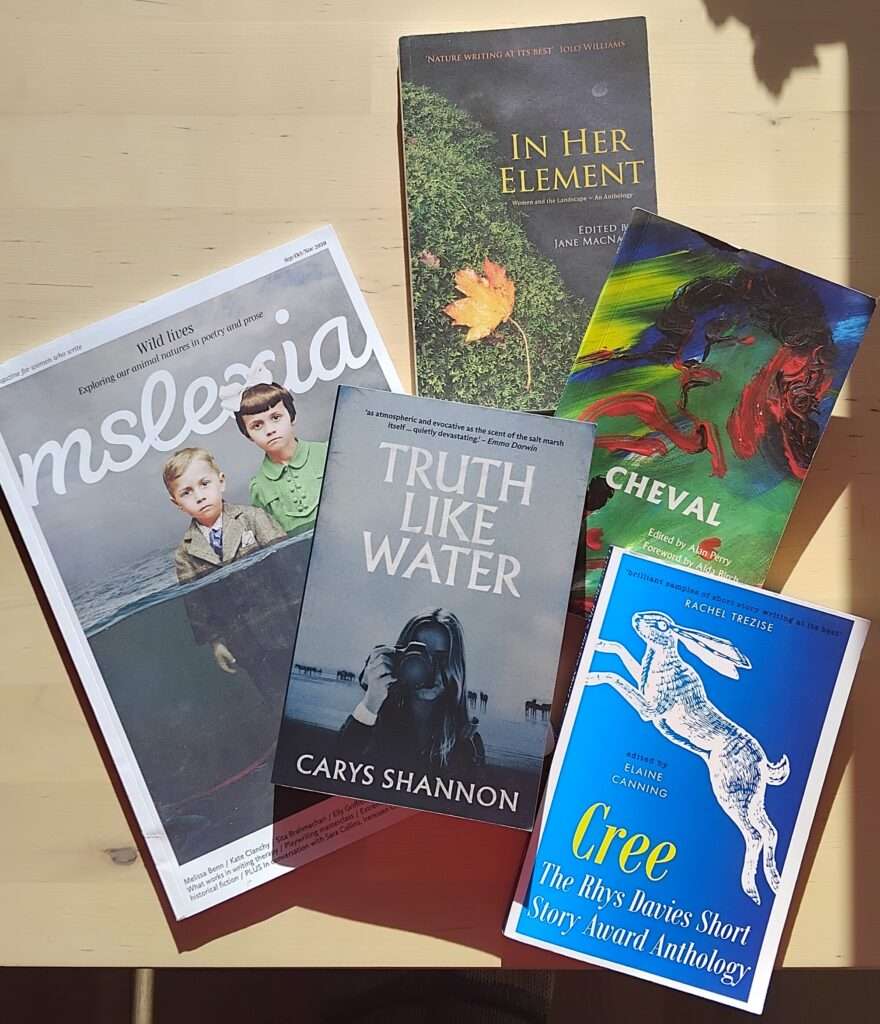
From there, I wrote and performed a lot of poetry at open-mic nights in Swansea and Cardiff and also wrote short stories. I had a lot of false-starts with novels but was given a mentor by Literature Wales, which again helped me enormously to believe that it might be possible to write a novel.
I love the scope of novels, so, for now, my focus is there and I’m working on my second novel which I hope will be part of a series. I do still love scripts and I’m writing and learning more about that. Short stories will always feature for me too. I think being open to form is an excellent way to learn more about the different parts and tones of your writing voice.
I am more confident now as a writer and about the writing and reading that I do. I talk a lot about this on my personal Substack, because I genuinely want to encourage people to write who might also be struggling with confidence or believing that your voice matters. It does. We need diverse stories now more than ever. As for me, I read or write every day for the pleasure and process of it. Some of those words will make it into future work, and some are just for me.
‘Breathing in is reading, breathing out is writing.’
What kind of writing excites you most?
As a reader, I appreciate writing that has heart, real emotional truth – I want to truly connect with the human experience that character is living both on the personal and universal level. Elizabeth Strout is one of my favourite writers for this reason, as is Douglas Stuart for the compassion he shows to all his characters, allowing them to be fully-realised, struggling humans. As a reader, I also love being immersed in a landscape, I want to feel transported. Eowyn Ivey is another favourite writer for this reason.
Quite often when I’m reading something that blows me away, I have to put the book down and rush back to make notes on my own writing. Story, when it’s done well, is one of the most motivating reasons to write.
What are you working on right now?
I’m working on my second novel: a dual timeline mystery moving between present day Wales and 60s/70s rural Spain. I’m hoping it is the first in a trilogy with an investigative journalist as the protagonist. My pitch is: Kate Mosse’s Labyrinth meets Val McDermid’s Allie Burns, with the emotional life of Rebecca Wait’s I’m Sorry You Feel That Way. It builds on some of themes that were present in Truth Like Water: truth, emotional inheritance and belief, but with a much wider lens. I’m really excited about the story and also daunted by the scope of it. It requires a lot of research for the past timeline and certainly feels “bigger” than my first novel in lots of ways. But, when I feel that fear at the keyboard, I know I’m stretching myself as a writer and that is so important.
Up to a certain point with a novel, it’s possible to work on other things, then I do think holding the huge world of a novel in your head becomes all consuming, so at the moment, I have a number of short stories and a radio play that I’m working on too.
Where do you write?
I write at home, at a table in front of the window facing the mountains, and always in silence. I like to watch the clouds and the birds between thoughts. I often write in company using London Writers’ Salon online Writers’ Hour as this helps, or sometimes in the local library. I do think you can write anywhere if you are engrossed enough in what you’re doing. My preference is for quiet, but I’ve also got words down on the train or in a busy café. I’d rule nothing out!
When do you write?
My best writing time is usually after a walk mid-morning or early afternoon.
And… Why do you write?
Curiosity. A love of stories. A desire to create, to play, to craft, and to understand the human experience in all its forms.
Is there a book or author that has influenced you?
There are a lot! Sarah Waters is the writer who made me realise I wanted to write novels. I read Fingersmith and just wanted to be that compelling as a writer. And Douglas Stuart’s Shuggie Bain – that was seminal for me.
And what role does reading play in your creative practice?
Breathing in is reading, breathing out is writing. I do think it’s as simple as that. Read widely, read what you love but also what challenges you. Read for pleasure and read or re-read as a writer to figure out why something works (or doesn’t) and apply this to your work.
Tell us about something you are really proud of.
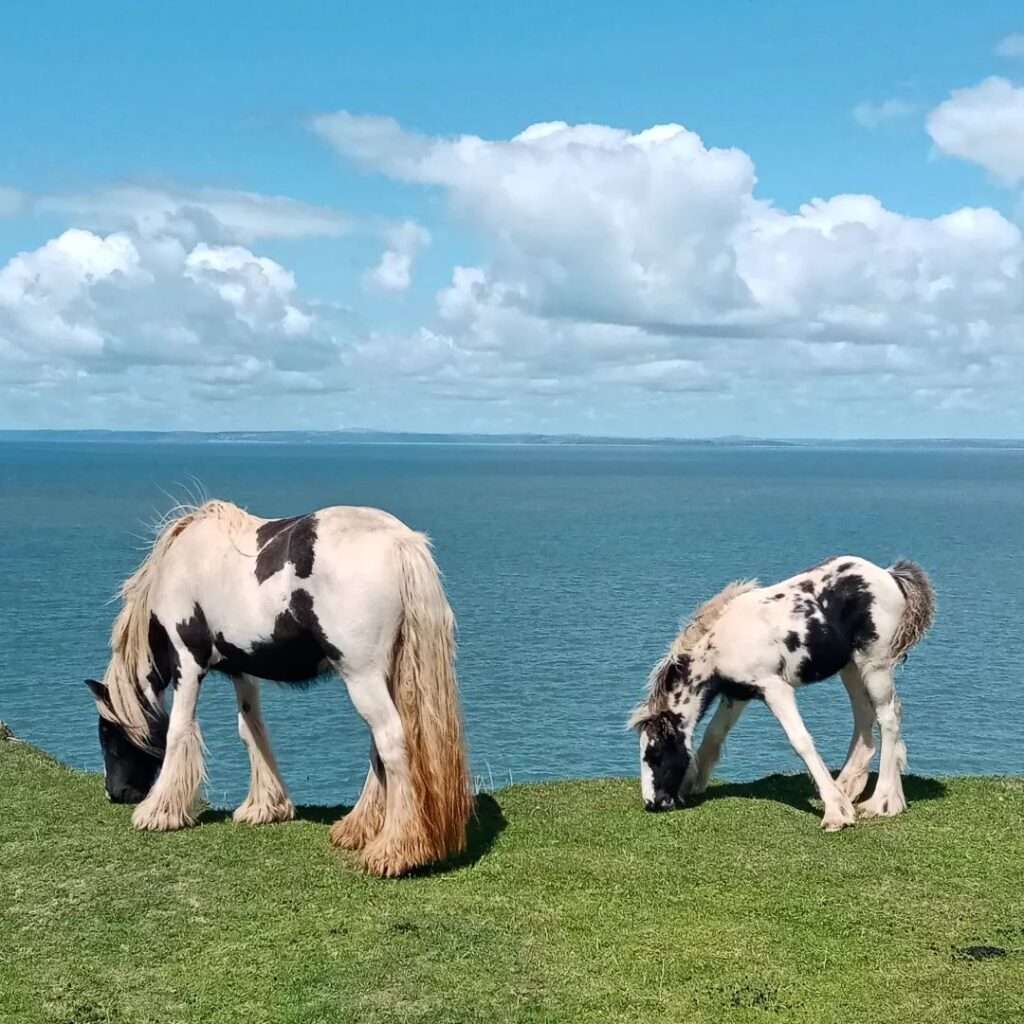
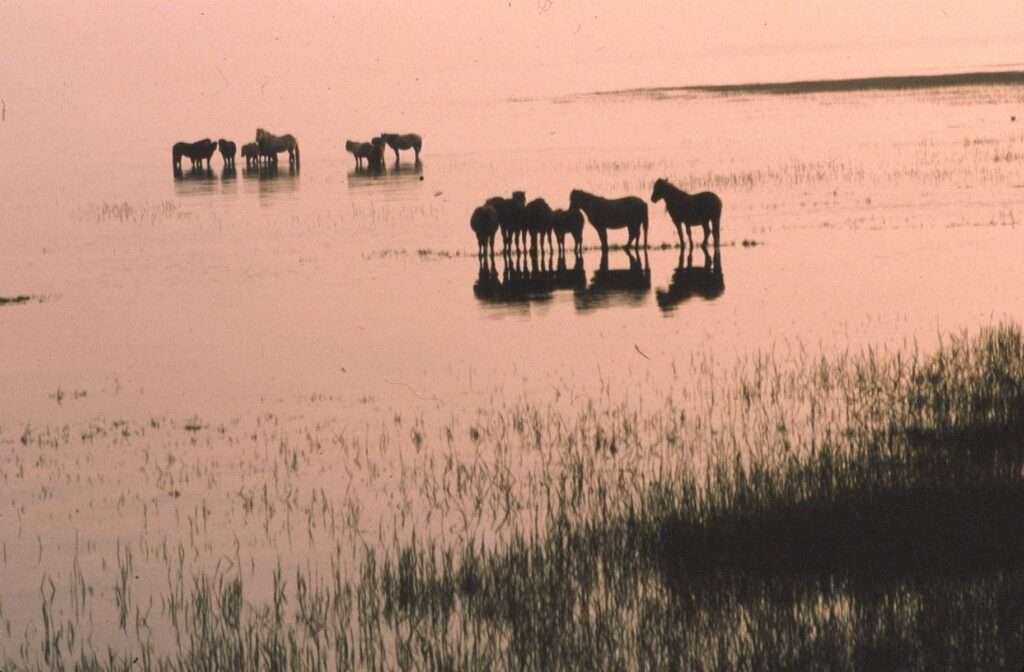
I’m genuinely proud of my debut novel, Truth Like Water, which, although fictional, is wrapped up in my own regional and rural identity. I’m proud that the characters live and speak as I have seen and experienced in my own life. The book, in the end, turned out to be such a love letter to the north Gower estuary I grew up on, and I’m delighted and proud that it is out there in the world meeting its readers.
What’s the best advice you’ve been given as a writer developing your practice?
I think the best advice I’ve been given was by the writer Lucy Atkins who very kindly replied to an email I sent her. She said that quite often the only difference between an unpublished and a published writer is persistence. That really stayed with me and helped during the submissions process which can feel so disempowering for writers.
The other thing I’d share isn’t something I’ve been told, rather something I’ve realised through the process of being published: you need to define your own idea of success, whatever that looks like, and work towards it. Everything else is either noise or information – be discerning and keep going.
There are so many ways to have a creative career. What would life as a ‘working’ writer look like for you?
I have what is called a “patchwork” or “portfolio” career – which basically means that I do lots of things to earn a living rather than one full time job. I live rurally and work remotely. Depending on the time of year (or week) this can mean freelance writing, English teaching, Creative Coaching or Facilitating. I consider myself a working writer even though I’m not at the stage where I can live off my creative writing. However, being published has opened up more writing-adjacent opportunities, expanded my networks and given me a public profile, all of which feeds the other work. With this model of working, I’m also able to prioritise my creative writing in a way that works for me.
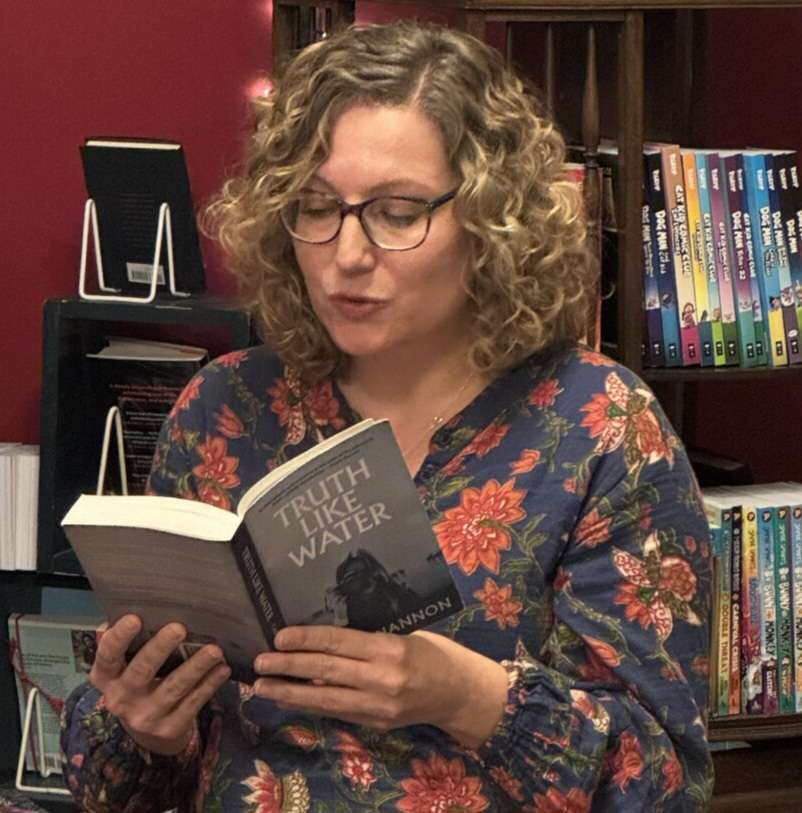
Carys Shannon is originally from north Gower, Swansea, and now lives in the Spanish Pyrenees. She has had short stories published by Honno Press, Parthian Books, and Mslexia magazine, as well as broadcast on BBC Radio 4. Her award-winning debut novel, Truth Like Water, was published by Parthian Books in October 2025. Carys is one of 10 writers selected for the Hay Festival Writers at Work programme 2026. When not writing, Carys is happiest enjoying slow time in big nature.