Skip to content
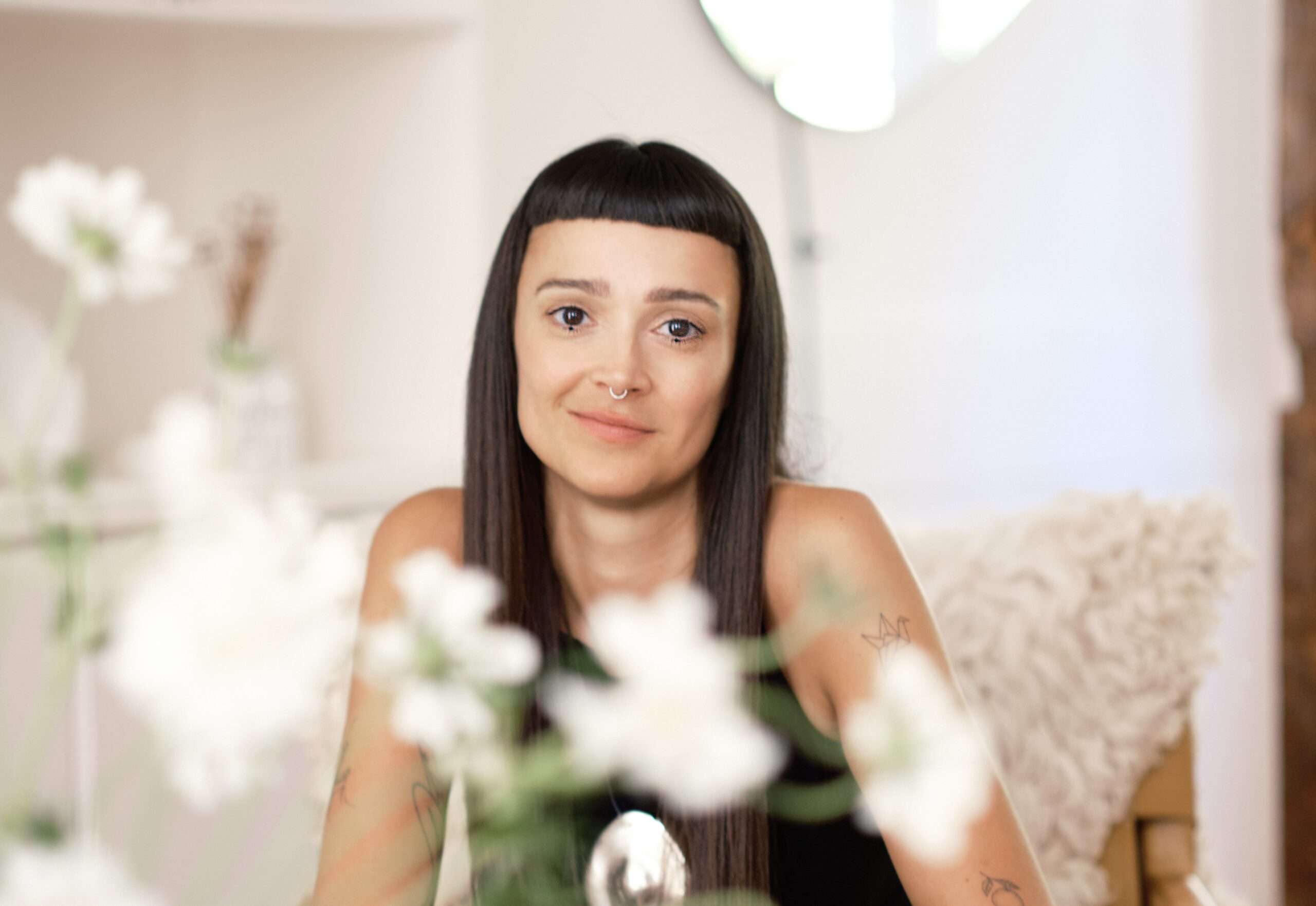
As a critically acclaimed writer, editor and literary agent, Abigail Bergstrom brings a fascinatingly unique and holistic perspective to the craft of writing. Wending from the inspirations for her second novel, Selfish Girls – currently Waterstones Welsh Book of the Month – and seeking creativity in silence and simplicity, to her new psychotherapeutic project in collaboration with Helen Sproat and the perspective-altering experience of Neige Sinno’s Sad Tiger, we loved this snapshot of Abigail’s creative life.
What was the first thing you did this morning?
I got the Eurostar to Paris as I’m getting married in France this Saturday.
Where are you right now? What can you see from your workspace?
I’m in a chateau in Normandy, I am sat at my desk looking out over fields of wildflowers, it’s peaceful and feels like the world has lowered its voice.
What are you working on at the moment?
I’ve just launched a psychotherapeutic writing programme. In my roles as both a writer and a literary mentor, I’ve always wanted to create an offering but I always knew it would need to have a therapeutic modality. Sometimes it just takes meeting the right collaborator to really bring an idea into existence in a way that goes beyond your own imagination. That’s exactly what happened when I met my co-founder, the existential psychotherapist Helen Sproat. We’ve called it The Bone Project and it blends writing, therapy and embodied practice. It is about going bone deep and inviting language where there was once only feeling. It offers carefully guided writing exercises, open dialogue and readings from literature, philosophy and theory to weave together creativity and self-enquiry. It’s such a fulfilling project to work on and I haven’t been as excited about anything in a long time.
What are you reading at the moment?
I just finished Arundhati Roy’s Mother Mary Comes to Me. It’s a brilliant piece of work exploring her complex relationship with her mother. A highlight was her going shopping for a lilac lace bra with John Berger, which may be the most charming sentence ever committed to literary non-fiction and is proof that literary theory and good lingerie are not mutually exclusive.
Tell us about a book that has changed the course of your writing life
Sad Tiger by Neige Sinno is one of the most arresting memoirs I’ve ever read, it recalibrated my understanding of what honesty in prose can look like. Annie Ernaux described the ready experience to be ‘like descending into an abyss with your eyes open. It forces you to see, to really see’. It’s the sort of book that quietly raises the stakes for everyone else.
How did your newest book, Selfish Girls, come about?
I’ve always wanted to write about sisters, it’s such an intense and complex relationship. So crucial, yet so mired in the past. There is a secret language between sisters that goes beyond words which I wanted to try and capture on the page. I kept returning to the Graeae sisters as a kind of extreme representation of this – these three figures sharing a single eye, a single way of seeing, passing perception between them. There’s something fascinating about writing sisterhood as both intimacy and constraint, you have a shared world-view that is never entirely your own. I was also circling daughters and mothers, and that uneasy pull between belonging and wanting to break away. The mother (culturally and certainly narratively) is always both central and just out of reach. Deeply present, yet never fully knowable. That tension, that constant reinterpretation, felt like the real engine of the book.
On your Substack, you’ve done a series with other authors called ‘Second Book Syndrome’. Did you have a version of this with Selfish Girls? How did the process differ from your debut?
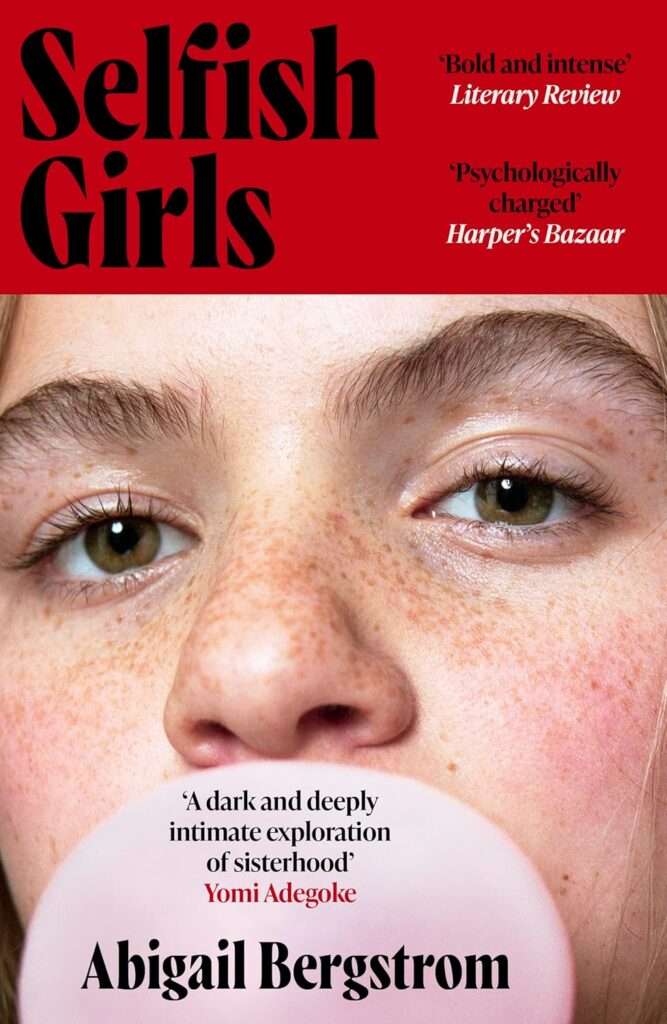
I think with your first book you have no conception as to what you’re really getting yourself in for. The endless drafts and rewrites, the time poured into writing a novel feels endless. Whereas with Selfish Girls I was acutely aware of the mountain I was about to climb, and knew all too well that there would be several mountains waiting for me behind that one. It was daunting.
Do you think there will be a ‘Third Book Syndrome’?
No. I was really griping onto something with Selfish Girls, the process felt so tight and intense like trying to braid water with bare hands. There was something I was investing in that book, something I knew I couldn’t get wrong. The stakes were too high. Whereas my third book is going to be a lot more free, more cynical and loose in essence. It feels more like I am going to be undoing the braids and embracing the mess that unravels.
What’s your favourite part of your creative process?
The beginning, before you even start writing. When an idea is forming inside you, outside of language. It’s a feeling, a mood, a sense. It feels like something being gifted to you, an opening for something to pass in and through.
What would your ideal day of writing look like?
I’m in my parents’ caravan. Completely alone but for my dog, Luca. Everything I need is within a short reach. There is utter simplicity and nothing to take note of other than the nature you’re surrounded by and taking Luca for the occasional walk. The work is the sole intention. It’s heaven.
Which piece of published writing are you most proud of?
I wrote a piece in the Guardian recently exploring our literary fascination with inaccessible, emotionally distant maternal figures in works by Deborah Levy, Gwendoline Riley and Elena Ferrante and how those works inspired the idea for Selfish Girls.
What’s the best piece of writing advice you’ve been given?
Nayyirah Waheed: ‘The thing you are most afraid to write. Write that.’